


AI Dungeon Master & RPG Fablia
4.5143.00 Reviews
App Specs
- Version
- 3.1.0
- Updated On
- License
- Free
- Downloads
- 10,000+
- Developer
- Applogy Studio
- Categories
- Role Playing
- Platform
- Android
Screenshots
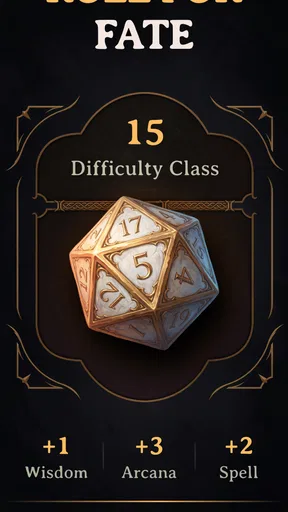
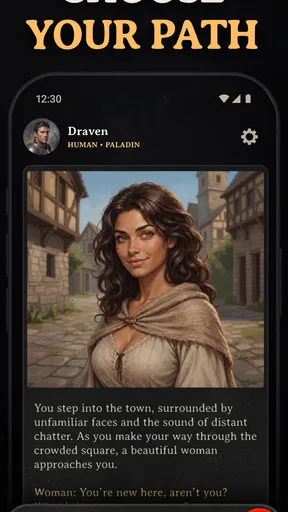

 Analysis by AppCompare
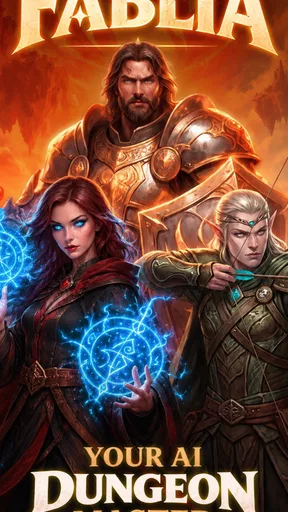
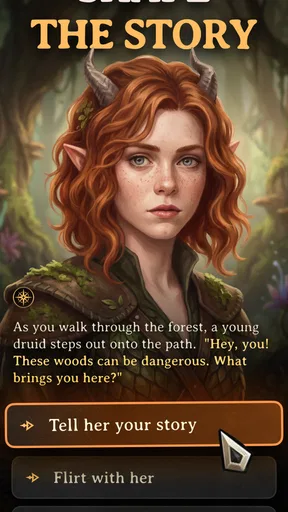
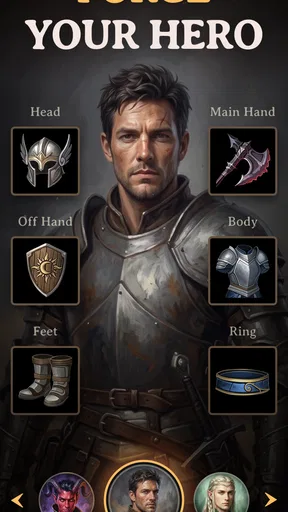
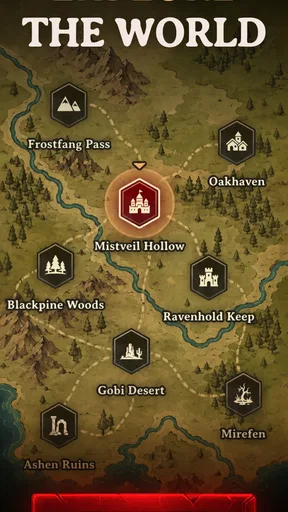
I approached AI Dungeon Master & RPG Fablia as a role-playing game for people who enjoy making choices more than following a fixed path. Its central idea is easy to understand: you create a hero, describe what you want to do, and let an AI Dungeon Master turn those decisions into an unfolding fantasy adventure. In practice, that makes it feel closer to an improvised tabletop session than to a conventional mobile RPG with a predetermined campaign.
The game is developed by Applogy Studio and is free to start. It sits in the role-playing category, carries an Everyone age rating, and has reached over ten thousand installs. Its average score is 4.5 from more than five hundred ratings, with over sixty written reviews, which suggests that the concept is connecting with a meaningful group of players even though it remains a relatively small release.
How Fablia feels to read and navigate
The strongest part of this kind of game is the freedom to approach a scene in your own words. Instead of scanning a crowded action interface, I spend most of my time reading the current situation and deciding how my character should respond. That makes the experience naturally suited to players who prefer thoughtful pacing, imagination, and text-led decision-making over rapid combat controls.
The basic loop is also approachable. I can think about the scene, choose an action, and see how the story reacts. That simplicity matters for new role-playing players because there is no need to learn a large collection of menus before understanding the main appeal. The game’s short store description, “AI Dungeon Master,” is brief, but it accurately points toward the experience: the system is meant to act as a storyteller rather than merely present a list of missions.
For readability, the biggest benefit is the slower rhythm. I am not required to react to an enemy in a split second or memorize a complicated button layout. A player who needs extra time to process information can pause mentally between turns and decide on a response. That is a useful difference from many mobile fantasy games, where progress depends on quick taps, visual effects, and constant attention.
At the same time, an AI-led story can be less predictable than a traditional menu-driven game. The player has to understand the current situation from prose and keep track of what has happened. If the narrative becomes elaborate, remembering characters, promises, locations, and unfinished problems can require effort. I found it helpful to treat each scene as a small objective: identify the immediate problem, decide what my hero wants, and then act. This prevents the open-ended design from becoming mentally cluttered.
One practical technique is to give the hero a clear personality before making difficult choices. A cautious healer, an ambitious thief, and an honorable knight will naturally produce different decisions even when they face the same situation. This turns the game’s freedom into a manageable framework. Rather than trying every possible action, I can ask, “What would this character do?” That makes the story easier to follow and gives the AI Dungeon Master a consistent direction.
Worth Reading Before You Choose

Flipboard Shows What News Apps Must Do Beyond the Feed

Switching to Android Auto Means Rethinking Your Driving Routine

Google Calendar Makes a Crowded Week Easier to Manage

Ludo King Makes the Most of the Minutes Between Plans

Baby Panda World Brings Quick Play to Modern Phones, but Its Game Library Feels Busy

ESPN’s Live Game View Makes Following Close Games Easier
The game is also more accessible to people who dislike conventional role-playing conventions. You do not need to know every fantasy rule or arrive with experience from tabletop games. The premise of building a hero and rolling the dice is familiar enough for genre fans, while the conversational structure gives newcomers room to experiment. I would still recommend patience to anyone who expects a polished, heavily illustrated adventure with clearly marked objectives. Fablia asks the player to contribute imagination, not simply consume content.
Where the open format helps different players
The flexible storytelling can support different communication styles. A player who enjoys detailed descriptions can try elaborate plans, while someone who prefers short commands can keep actions simple. That flexibility is one of the more interesting strengths of an AI Dungeon Master because it does not force every player into the same dialogue choices.
However, flexibility is not the same as perfect clarity. The player may need to rephrase an idea if the result does not match the intention. I found that concrete wording works better than vague instructions. “I search the desk for a hidden drawer before speaking to the guard” gives a clearer direction than “I investigate everything.” This is a useful habit for anyone who finds open-ended interfaces tiring: state one action, one target, and one reason whenever possible.
The same approach helps players who are new to interactive fiction. Instead of attempting a grand plan involving several characters and locations, break it into steps. First inspect the room, then question the witness, then decide whether to leave. Smaller inputs make the story easier to monitor and reduce the chance of losing track of the intended goal.
Because the experience is built around reading and entering choices, navigation feels less demanding than a game that constantly switches between combat, inventory, maps, and upgrades. That does not mean it is effortless. The player still has to follow the narrative, interpret consequences, and decide when to take risks. The accessibility advantage comes from control over pace, not from removing all cognitive demands.
Motor, sensory, and situational considerations
From a motor perspective, a text-focused role-playing game can be a comfortable alternative to games that depend on repeated tapping, virtual joysticks, or precise timing. The core action is choosing what to do, so players who find fast touch controls difficult may prefer this format. It is especially suitable for relaxed sessions where the phone can be held steadily and the player can concentrate on one decision at a time.
That advantage has limits. Entering custom actions still requires typing or using the device’s input method, and longer responses can be tiring for someone with limited hand movement or discomfort during extended phone use. A player who has difficulty with typing may get more from short, direct commands than from writing elaborate role-playing dialogue. The game’s concept encourages creativity, but creativity does not require long paragraphs; a few precise words can be enough to move a scene forward.
Voice input may be useful for some players depending on their phone and personal setup, but I would treat that as a device-level option rather than a guaranteed game feature. The safest workflow is to prepare short commands and use the input method that feels most reliable. If speaking to the phone is not comfortable or practical, the game can still be approached through compact written actions.
Sensory demands are different from those of an action-heavy fantasy title. The appeal is primarily narrative, so players who find flashing effects, constant animation, or loud battle audio distracting may appreciate the calmer structure. A quiet reading environment can make it easier to follow the story, especially when a scene introduces several names or competing motives.
On the other hand, anyone with visual reading difficulties should consider whether extended text on a phone is comfortable. The game’s identity depends on understanding written situations, so reading is not a side activity that can be ignored. Increasing the device’s text size or display scaling may help if the operating system and screen layout remain usable, but this is a general phone adjustment rather than something I would assume the game handles perfectly.
Players with attention-related needs may benefit from setting a clear session goal. For example, I might play until my hero reaches a town, resolves a conversation, or finishes one short investigation. Open-ended AI stories can continue indefinitely in the imagination, which is exciting, but that same quality can make it easy to lose track of time or stop at an awkward point. A small personal endpoint makes the experience easier to fit into a routine.
A realistic everyday use case is a short evening break after work or study. I can open the game, give my hero one immediate objective, and make a few decisions without committing to a long multiplayer session. There is no need to coordinate with friends or wait for a scheduled group. That makes it appealing for someone whose free time changes from day to day. The trade-off is that the experience may feel less socially rewarding than a cooperative RPG or a regular tabletop group.
It can also work during travel or waiting periods when I want something more mentally engaging than scrolling. The main requirement is enough concentration to read and respond. In a noisy place, a text adventure may be preferable to an audio-dependent game, but crowded surroundings can still make it hard to retain story details. For that reason, I would use it in short chapters rather than trying to manage a complicated plot while distracted.
How it compares with familiar role-playing alternatives
Compared with a traditional mobile RPG, Fablia offers more freedom in how I express an action and less emphasis on collecting a fixed set of abilities. A conventional game is usually better when I want clear goals, visible progression, carefully balanced battles, and predictable rules. Fablia is more attractive when I want to test an unusual idea, negotiate with a character in my own words, or take a story in a direction that a menu of preset choices would not allow.
Compared with tabletop role-playing, it removes the need to schedule several people and find someone willing to run the session. The AI Dungeon Master fills that practical gap. I can play alone and make decisions whenever I have time. Still, it cannot replace the social energy of friends reacting together, the humor of a shared table, or the trust built by a human game master who knows the group personally.
It also differs from a standard interactive novel. Interactive novels normally offer a controlled set of branches written in advance, which can produce tighter pacing and more deliberate character arcs. Fablia’s appeal is the possibility of unexpected turns created from the player’s input. That freedom can produce memorable moments, but it may also lead to uneven pacing or a result that feels less carefully authored.
Players who mainly want visual spectacle, reflex challenges, or a deep equipment system should probably choose another role-playing game. This title is better for readers, improvisers, and people who enjoy treating a phone game as a creative conversation. The more willing I am to fill in details with my imagination, the more value I get from it.
Practical limitations before you begin
The free entry point makes experimentation easy, but the game includes in-app purchases ranging from $2.99 to $999.99 per item. That is important for anyone managing a strict budget or allowing a child to use the device. The Everyone rating describes the age classification, not a promise that every family will find the purchase structure comfortable. I would check purchase controls before handing the phone to a younger player.
The current version is 2.6.6, and the game requires Android 7.0 or later. That gives it a broad compatibility range among Android devices, although the actual comfort of reading and typing will still depend on the phone’s screen, keyboard, and performance. A smaller display may make longer story passages feel cramped, while an older device may be perfectly adequate if its text input remains responsive.
Another barrier is the uncertainty that naturally comes with AI storytelling. A player who wants every rule to behave consistently may become frustrated when an improvised narrative does not feel as exact as a conventional game system. I recommend approaching each session as collaborative fiction rather than as a competitive test of perfect mechanics. If a result seems unhelpful, restate the intention and continue instead of treating one awkward turn as a failed campaign.
It is also worth keeping personal boundaries in mind. Open-ended role-playing invites players to explore dramatic situations, but not every direction is enjoyable for every person. I prefer establishing a simple tone at the beginning, such as light adventure, mystery, or heroic fantasy. This gives the session a clearer identity and makes it easier to steer away from themes that are uncomfortable or simply not what I wanted that day.
For players with limited energy or concentration, the best workflow is deliberately modest: create a focused hero, choose one immediate goal, use short actions, and stop after a natural scene. That method reduces typing, limits memory load, and makes the game feel more like a series of manageable episodes. It also exposes one of the title’s central trade-offs: the more freedom I request, the more responsibility I take for organizing the experience.
My inclusive verdict
I see AI Dungeon Master & RPG Fablia as a promising choice for players who want a personal fantasy story without the fixed structure of a typical mobile RPG. Its strongest accessibility quality is control over pace and expression. I can think before acting, choose my own wording, and play without coordinating a group. Those qualities make it easier to fit into different routines and more welcoming to people who do not enjoy fast touch controls.
It is not automatically comfortable for everyone. Reading remains central, typing can become tiring, and the open-ended format asks the player to remember context and guide the narrative. The AI approach may also feel less dependable than a carefully authored campaign. Players who need highly predictable rules, strong visual signposting, or a tightly managed story will likely be happier with a conventional role-playing alternative.
My recommendation is to start with a small scenario rather than attempting an enormous epic immediately. Give the hero one motivation, describe the desired tone, and make actions specific. If the first scene feels too vague, narrow the request instead of abandoning the game. That small adjustment reveals whether the conversational format suits you.
For me, the game works best as a flexible solo storytelling tool: something to open when I want to make decisions, imagine consequences, and build a fantasy adventure at my own speed. The free starting price lowers the risk of trying it, while the purchase range means families and budget-conscious players should be careful with spending controls. Overall, I would recommend it to readers and creative role-players who value freedom over polish, but I would point action-focused players toward a more traditional game.
Pros
- AI-generated stories adapt quickly to unexpected player choices.
- Supports creative role-playing without requiring a fixed campaign group.
- Useful for solo players seeking an on-demand fantasy adventure.
- Multiple scenarios can provide variety between play sessions.
- Encourages experimentation with characters
- quests
- and different play styles.
Cons
- Story quality may vary noticeably between sessions or prompts.
- AI responses can occasionally contradict established characters or events.
- Long campaigns may lose continuity as the adventure develops.
- Some features or content may require in-app purchases or subscriptions.
- Text-based gameplay may feel slow for players expecting rich visuals or action.
FAQs for AI Dungeon Master & RPG Fablia
What is AI Dungeon Master & RPG Fablia?
AI Dungeon Master & RPG Fablia is an interactive role-playing game that uses artificial intelligence to create adventures, narrate scenes, control characters, and react to your decisions. Instead of following one fixed storyline, you can explore a flexible fantasy world, make choices, interact with characters, and shape the direction of the campaign through natural-language actions and dialogue.
Do I need previous tabletop RPG experience to play AI Dungeon Master & RPG Fablia?
No. The game is designed to be accessible to both beginners and experienced role-playing fans. New players can simply describe what they want their character to do and follow the AI Dungeon Master’s guidance, while experienced users may enjoy creating more detailed characters, strategies, and stories. Some familiarity with role-playing concepts can help, but it is not required.
Does AI Dungeon Master & RPG Fablia require an internet connection?
An internet connection may be necessary for the main experience because the application relies on online AI services to generate narration, conversations, events, and other story content. Availability and performance can depend on your connection and the service’s servers. Before downloading, check the app-store listing for current offline limitations, account requirements, and any data-use information.
Is AI Dungeon Master & RPG Fablia free to download and play?
The application may be available to download at no initial cost, but some features, content, usage limits, or longer sessions can depend on in-app purchases or a subscription. Pricing and included benefits may vary between Android and iOS and can change over time. Review the store page carefully before starting a campaign, especially if several people use the same device.
Is the content in AI Dungeon Master & RPG Fablia suitable for children?
The suitability of the game depends on the stories created during play, since AI-generated adventures can vary in tone, themes, violence, romance, or mature language. Parents should check the official age rating, privacy policy, and available safety controls before allowing younger users to play. It is also advisable to supervise generated content and avoid sharing personal information in conversations.


